Éigse is devoted to the cultivation of a wide range of research on the Irish language and its literature, embracing both textual and contextual studies. Volume …
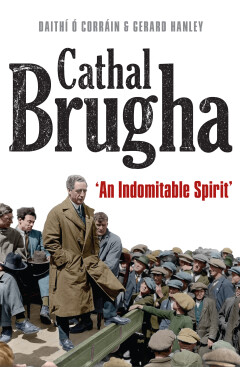
By any measure, Cathal Brugha’s life was extraordinary: a member of the Gaelic League, Irish Republican Brotherhood and Irish Volunteers; a celebrated survivor …
Since the end of the eighteenth century, the United States has offered sanctuary and support to Irish men and women engaged in the struggle for Irish independen…
The town of Galway occupied a unique situation in medieval Ireland. Conspicuously English in its religious and political allegiances, it existed in an overwhelm…
In the sixteenth century the Duhallow region of north-west Co. Cork was one of the most indisputably Irish parts of Ireland. Characterized geographically by the…
This study examines how the professionalization and development of nursing and midwifery in the nineteenth century was reflected in the poor-law unions of Borri…
In the spring of 1919, UK Prime Minister David Lloyd George wrote: ‘The whole of Europe is filled with the spirit of revolution. There is a deep sense not only …
Tracing its history to the foundation of the Irish Volunteers in 1913, the Irish Defence Forces has evolved beyond recognition from the force that emerged in ta…
In December 1922 General Nevil Macready sailed away from Dublin for the last time, marking the end of British rule in most of Ireland. Macready was the last in …
This collection featuring eleven essays by established and early career scholars, explores multiple dimensions to the Jesuit mission in early modern Ireland. Th…