
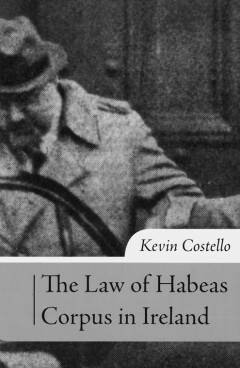
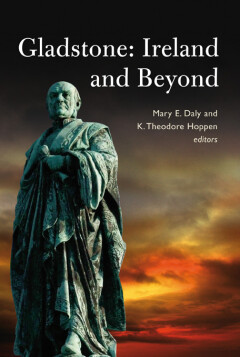
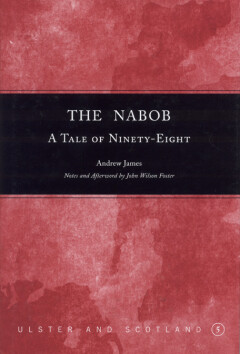
This book considers the use made by Irish Republicans of British courts in the struggle for independence, over the period between the Easter Rising and the Civi…
Charles Trevelyan, the assistant secretary to the Treasury during the Famine years, has received the bulk of the blame for the government’s parsimonious respons…
The author, who won the Beckett Prize in Irish History for 2000, uses approaches developed in the study of English social conflict to investigate social conflic…
This book presents a new interpretation of the state of the Irish Church before the Tudor reformations. Part I shows that the Irish Church, far from being in de…
Between 1740 and 1848, an overwhelming majority of the British ruling class determined that a legislative union with Ireland was preferable to the devolved cons…
Charles Maturin (1780–1824) is best known today for his Gothic masterpiece Melmoth the Wanderer (1820). A thorough study of his wider work reveals him to have b…
Clubs and societies emerge as a distinct feature of the Irish social landscape from the end of the seventeenth century. The most notable early organization was …
This study looks at the Ribbon secret society in Sligo town and county in the early nineteenth century. Comprising well over 3,000 members throughout the county…
This book contains the text and illustrations of ten papers delivered at a conference held in the Irish Architectural Archive in January 2005 to mark the retire…
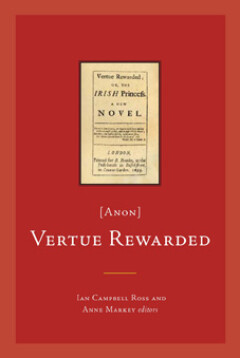
Most Irish fiction published between 1650 and 1900 has fallen into virtual oblivion. Research by the Loebers for their Guide to Irish Fiction has led to the ide…