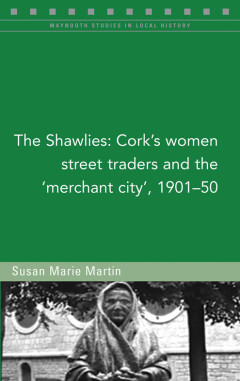
For centuries, working-class Irish women survived as street traders, selling fruit, vegetables and second-hand clothing. In Cork they were known as ‘the Shawlie…
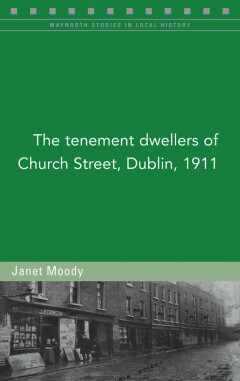
This publication aims to re-constitute a micro-community of 132 families living in Church Street in the heart of the worst slums in Dublin, using the 1911 censu…
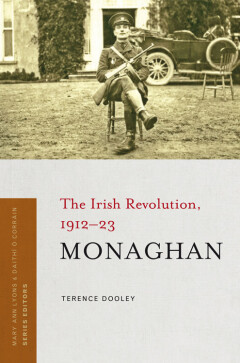
In Monaghan, the transfer of land ownership and political power under British government legislation from the late nineteenth century resulted in the overthrow …
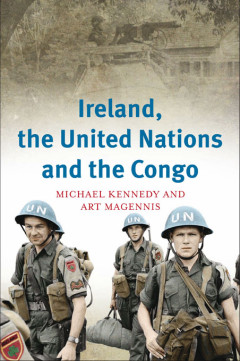
In 1961 Irish United Nations peacekeepers went into combat in the Congolese province of Katanga. It was the Irish Defence Forces’ first experience of active ser…
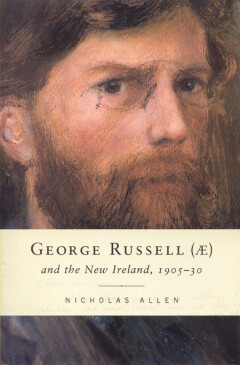
George Russell (1867–1935), poet and author, was a central figure of the Irish literary revival. He was editor of early 20th-century Ireland's two most importan…
An absorbing evaluation of independent Ireland’s response to the rise and consolidation of Nazism in Germany, this book places Irish-German relations in the con…
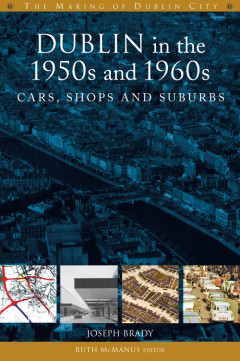
After the relative gloom of the 1950s, there was a rapid economic pick-up in the early 1960s. Car ownership increased as standards of living improved and Dublin…
Douglas Hyde (1860-1949) was founder and first President of the Gaelic League, the first Professor in Modern Irish at University College Dublin and an active me…
This collection pursues new areas of inquiry and offers new perspectives on familiar subjects in the history of education in Ireland and Europe from the sevente…
This book focuses on Patrick Pearse the theatre man. Pearse, like many among the revolutionary generation, was deeply interested in the theatre and its possibil…
Martin ‘Máirtín Mór’ McDonogh was, in every sense of the word, Galway’s ‘big man’. A natural entrepreneur, and a man of drive, ambition and no small intellect, …
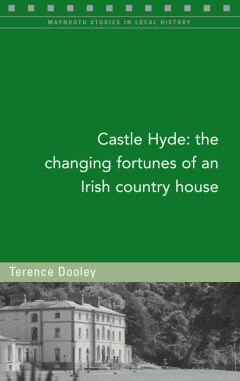
Drawing on archival materials, and incorporating never-before-seen images, this volume presents a spectrum of experience: from owners, to servants and tenants, …