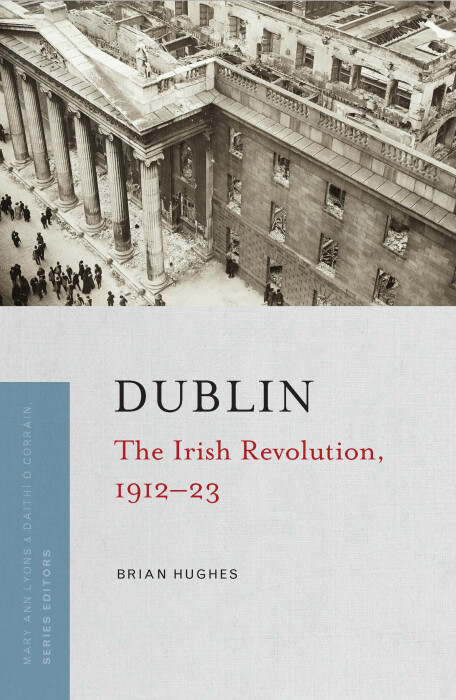
Dublin
The Irish Revolution, 1912−1923
Brian Hughes
“This book is a welcome addition to the literature on early twentieth-century Irish history. The author successfully foregrounds the effects of the Irish War of Independence and subsequent Civil War on the population of Dublin. As a result, the book will be particularly interesting for students of Irish social history ... There are chapters on the Easter Rising of 1916, the initial meetings of the Dáil as the government of the counter-state, the truce and the Civil War between pro-Treaty and anti-Treaty IRA factions. A concluding chapter examines the legacies of the Irish Civil War, and explains how IRA ex-servicemen, former Unionist supporters and the Protestant minority fared after the conflicts had ceased. Hughes is careful to point out throughout that simplistic narratives of Irish versus British or nationalist versus unionist fail to do justice to this period of Irish history in Dublin. As he began, so he ends by emphasising that there were many different Dubliners whose fortunes were equally varied in the fledgling Irish Free State.” David MacLiam, The Historian
"The story of Dublin and the Irish Revolution is really a mosaic of thousands of smaller stories. Brian Hughes has done a truly impressive job in corralling so much into a single volume." Niall Quinn, History Ireland
“The author has an eye for incongruous situations while filling out the picture of the socio-political and military narrative of those turbulent years in the history of Dublin. His attention to the quiet heroism of the women in Cumann na mBan is welcome”. Joe Carroll, The Irish Catholic, December, 2024
“This book is a welcome addition to the literature on early twentieth-century Irish history. The author successfully foregrounds the effects of the Irish War of Independence and subsequent Civil War on the population of Dublin. As a result, the book will be particularly interesting for students of Irish social history ... There are chapters on the Easter Rising of 1916, the initial meetings of the Dáil as the government of the counter-state, the truce and the Civil War between pro-Treaty and anti-Treaty IRA factions. A concluding chapter examines the legacies of the Irish Civil War, and explains how IRA ex-servicemen, former Unionist supporters and the Protestant minority fared after the conflicts had ceased. Hughes is careful to point out throughout that simplistic narratives of Irish versus British or nationalist versus unionist fail to do justice to this period of Irish history in Dublin. As he began, so he ends by emphasising that there were many different Dubliners whose fortunes were equally varied in the fledgling Irish Free State.” David MacLiam, The Historian, Autumn 2025